A bag can look compact in a product photograph and still be the wrong choice for your flight. The terms personal item and carry-on describe categories in an airline policy; they do not establish one worldwide allowance. Begin with the operating airline, fare, and route, then choose a bag that fits those requirements when packed.
The distinction also helps organize a trip. A smaller bag can keep the things you use during the journey close at hand, while a larger cabin bag can hold what you will unpack later. Treat the two spaces as a working arrangement, and buy only after you know how many pieces your ticket permits.
Read a real airline example carefully
American Airlines currently lists a personal-item limit of 18 by 14 by 8 inches, intended to fit beneath the seat in front. It lists a larger carry-on limit of 22 by 14 by 9 inches, including handles and wheels, and notes that some airports and aircraft have additional restrictions. These are American Airlines examples, checked on November 16, 2026, rather than universal bag dimensions.
Use the same reading process on your own booking: identify the number of pieces, size limits, any weight limits, and fare-specific conditions. Check every operating airline on a multi-carrier trip. A bag accepted on the outbound flight does not answer the question for a different carrier on the return.
Separate baggage allowance from security rules
The airline decides the bag allowance while the relevant security authorities set screening restrictions. The UK government, for example, directs passengers to their airline for permitted bag sizes and counts, and says that security rules can depend on the countries involved. Passing one requirement does not settle the other.
Build two short checks into planning. The first asks whether the packed bag meets the booked allowance. The second asks whether its contents are permitted and packed appropriately for each screening point. This keeps a retailer description such as cabin-friendly from becoming a substitute for either check.
Measure what you will actually carry
Measure the bag after packing it the way you intend to travel. Include bulging pockets, the bottle you place on the outside, fixed handles, and wheels where the airline includes them. A soft bag may look smaller empty, while an expansion section can change the packed dimensions. Record the result instead of relying only on a product capacity in liters.
If a weight limit applies, weigh the entire arrangement. Include a laptop sleeve, organizers, toiletries, and the extra layer you may put away at the airport. Check whether the airline states a separate or combined limit for multiple pieces. A small luggage scale is useful only when the result is compared with the correct rule.
Give the smaller bag a clear role
Plan around the items you need while moving through the airport or sitting in the cabin: documents, phone, wallet, a compact flight pouch, and any essential personal items. Add a laptop if the trip requires it and the bag can protect it appropriately. Keep a consistent pocket for documents so each stop does not start a new search.
Test retrieval while seated. If taking out your headphones requires lifting a tightly packed computer and toiletries onto your lap, adjust the layout. The most useful personal item is not necessarily the one with the largest advertised capacity; access, comfortable carrying, and the way it fits your permitted space all matter.
Plan for the larger bag to be out of reach
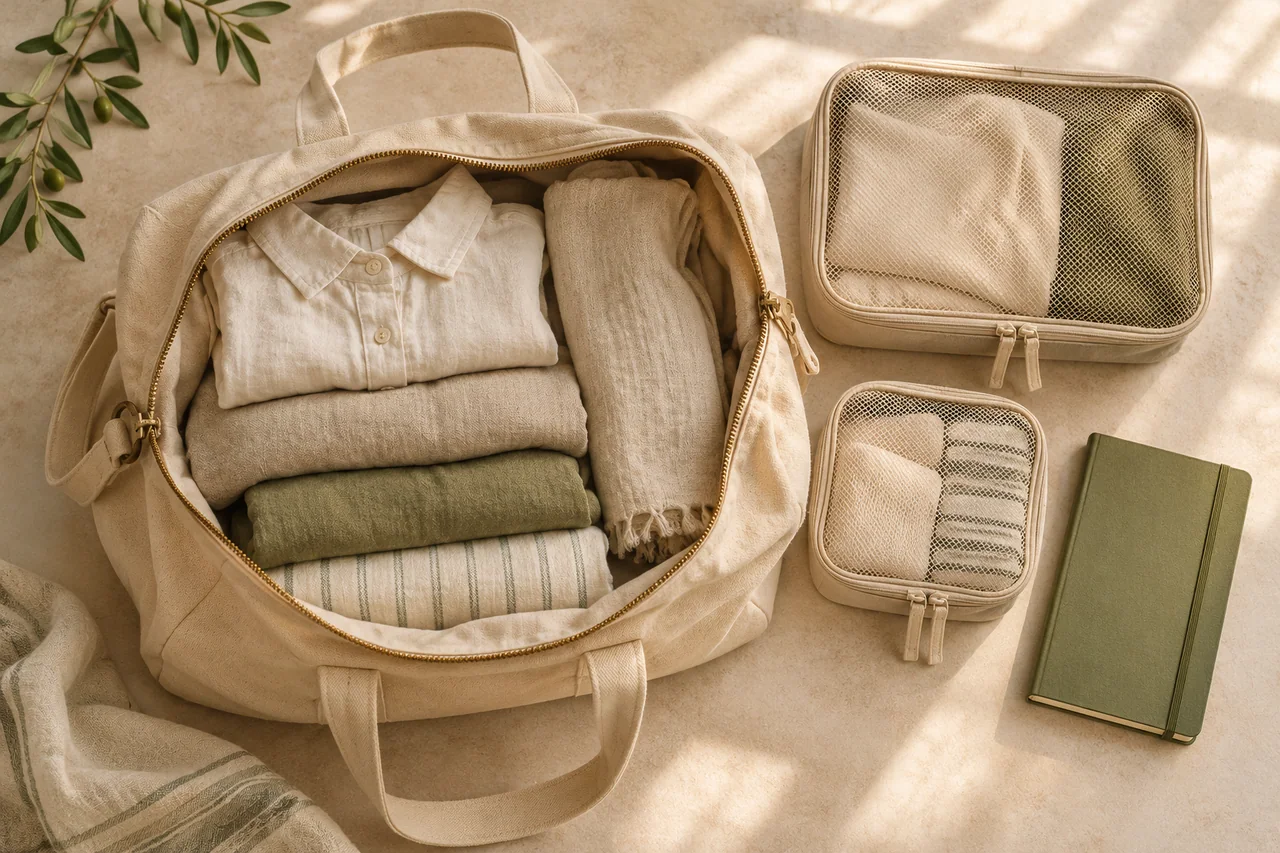
Place clothing, shoes, and items used at the destination in the larger bag when your allowance permits one. Put the things you may need before arrival near the top or in a removable pouch. Keep any item subject to cabin-only rules ready to retain if the airline asks to check the bag, following its current instructions.
Do the transfer mentally before boarding: which pouch would you take, and would it fit with the belongings staying with you? Avoid making your essential items depend on spare overhead-bin space. A clear plan also keeps you from opening the whole suitcase just to find one cable or a clean top.
Choose the bag through a packing rehearsal
Compare bags using the same real contents. Look at the usable opening, the laptop access, how the straps feel, and whether the loaded shape remains within your verified allowance. Check the return terms before ordering a bag you cannot examine in person. If a removable strap or pouch is part of the setup, include it in the rehearsal.
A one-bag trip may work well for your itinerary, while another trip may justify two permitted pieces. Pick the arrangement that makes your actual tasks easier: moving between trains, attending meetings, or changing hotels. Save the successful packing layout with the airline checks so the next booking starts from a useful reference rather than a product label.
KEEP IT SIMPLE
Your quick checklist
- Operating airline for each flight identified
- Piece count and fare conditions checked
- External dimensions and any weight limits recorded
- Loaded dimensions measured
- Outer pockets and attached items included
- Seated access to flight pouch tested
- Items to retain for gate checking identified
FURTHER READING
Sources & useful references
These sources support the guide. Rules and product details can change; check the relevant provider before your trip.
- American Airlines: carry-on bags and personal itemsChecked November 16, 2026
- GOV.UK: hand luggage restrictions at UK airportsChecked November 16, 2026
Our guides are based on source research and practical comparisons. We identify hands-on testing when it has actually taken place. Some commercial links may earn a commission.
How our recommendations and links work