A useful long-haul kit solves a sequence of small problems: finding your documents, settling into your seat, passing several hours comfortably, and arriving with the essentials still easy to reach. Start with those moments. A bag full of travel accessories can make each one harder if the item you need is buried under everything else.
This list is a starting point for an adult traveling with a cabin bag and a smaller personal item. Adjust it for your accessibility needs, climate, and airline allowance. The aim is to keep your in-flight routine in one compact pouch while reserving a little room for an unexpected overnight stop.
Pack for three points in the journey
Lay out three groups before filling your bag: airport access, seat access, and arrival. Airport access covers your travel documents, phone, and anything you expect to remove for screening. Seat access covers headphones, reading material, a charging cable, and your comfort items. Arrival covers a clean layer, your accommodation details, and the items you want before you can open the rest of your luggage.
Use the grouping to decide where things belong. A passport should have one consistent pocket. Your flight pouch should open without emptying the entire backpack. Keep a spare top in a separate small cube so it stays easy to identify. An organizer earns its space when it saves you a repeated search.
Choose a compact comfort kit
Begin with an adjustable layer you already like wearing, an eye mask if you use one, and a familiar pair of headphones or earplugs. If you want a travel pillow, try its packed size inside your actual bag before buying a second accessory to carry it. Neck shape, seat position, and personal preference matter more than a universal claim of the best design.
For a mask, check strap adjustment, the position of seams, and whether it presses on your eyelids. For headphones, consider whether you can use them comfortably with glasses and where their case will fit. These are shopping criteria, not results from a hands-on product test. Choose the few items you expect to use rather than duplicating every comfort function.
Keep power and entertainment simple
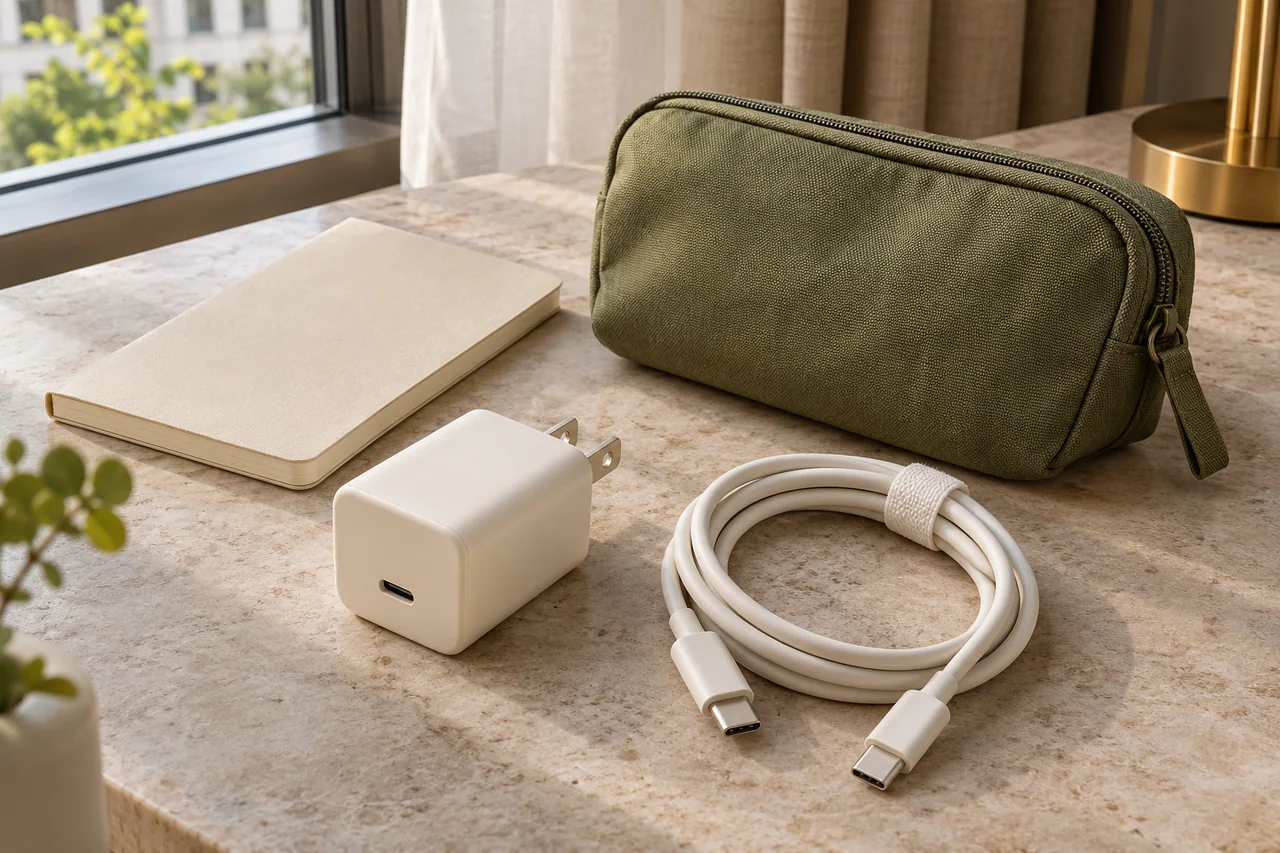
Download reading, audio, and the files you want before leaving home, then open one of each with the phone offline. Pack the cable that actually charges your main device and, when useful, a compact wall charger for the airport or destination. A backup cable is more valuable when it replaces a known weak point in your setup.
For U.S. air travel, FAA guidance requires spare lithium batteries and power banks to stay in cabin baggage; remove them if the bag is gate-checked. Protect their terminals and check your airline for stricter limits. In-seat power and permission to use a power bank are separate questions, so check the operating carrier before relying on either.
Bring a small arrival reset
An arrival pouch might hold a toothbrush, toothpaste, a small comb, and the familiar personal-care items you expect to use. Put the clean top and underwear nearby. Keep it modest: the objective is to make a delayed bag or early hotel arrival less awkward, not to reproduce your entire bathroom cabinet in the seat pocket.
At U.S. TSA checkpoints, the standard liquids allowance is containers of 3.4 ounces or 100 milliliters or less inside one quart-size bag per passenger. Specific exemptions have separate rules. Check every airport on an international itinerary, including transfers and the return; this U.S. limit is not a universal airport policy.
Prepare for a bag you cannot reach
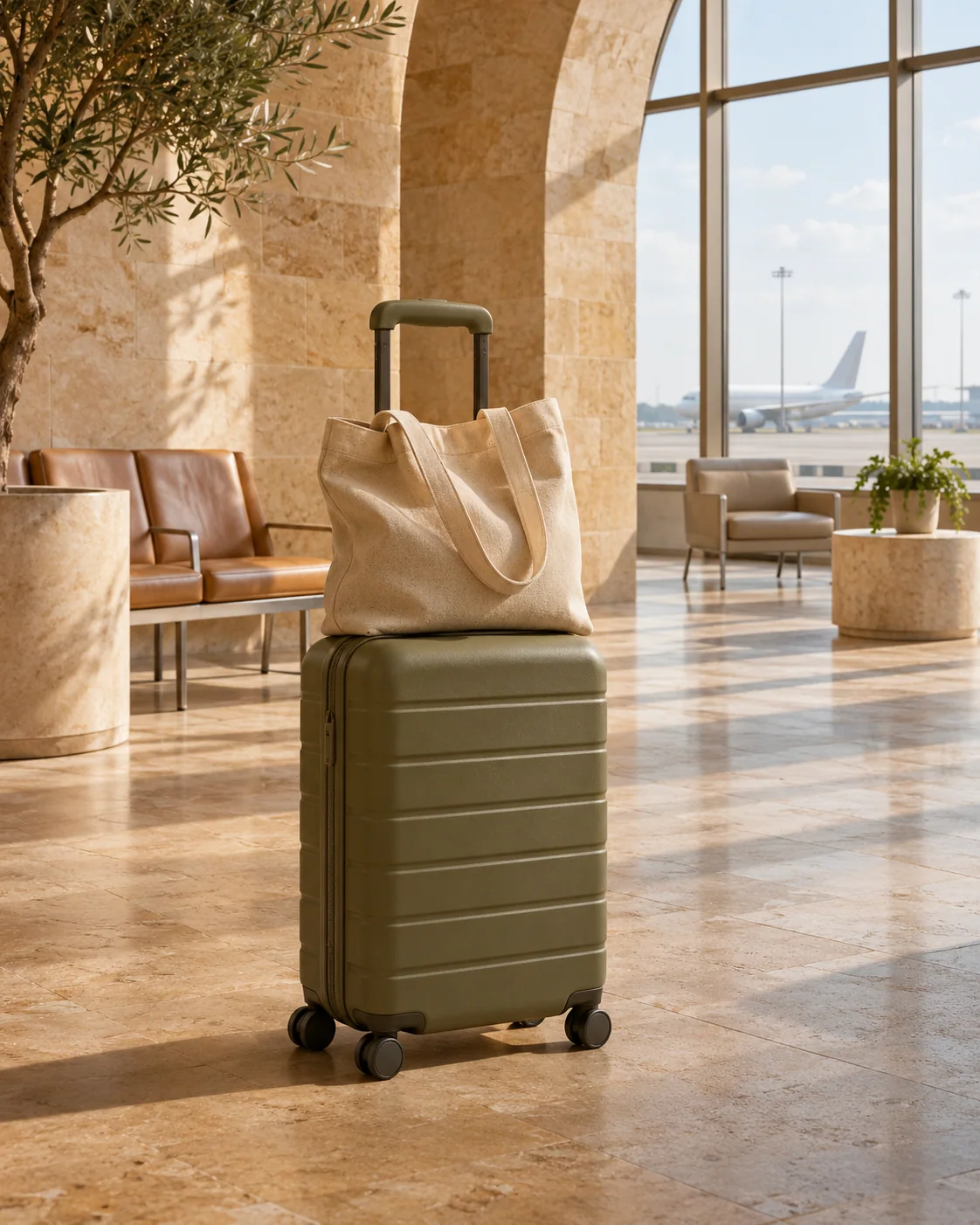
Before boarding, identify the small set of items you would need if the larger cabin bag were taken away for checking. Keep documents, valuables, essential personal items, and the flight pouch with you within your permitted allowance. Do this while you have space at the gate, rather than trying to reorganize beside a crowded aircraft door.
Carry an offline copy of the accommodation address and the next transport step. A printed note can also be useful if your phone is unavailable. Avoid spreading important items across several hidden pockets: a consistent location is easier to check when you are tired. Rehearse a quick document, phone, wallet, and pouch check before you leave any seat.
Run a seated packing rehearsal
Put the packed personal item under a chair and sit down. Can you retrieve the flight pouch, open it, and return everything without holding the whole bag on your knees? Does a bottle pocket make the bag noticeably wider? Can the main zip close after you add the layer you are currently wearing?
Remove anything whose use you cannot name. Then leave a little space for the small items that accumulate during a journey. A useful final edit is to choose one entertainment device, one primary charging arrangement, and one spare outfit. Add specialist items because your itinerary requires them, not because a long flight automatically calls for a larger shopping list.
KEEP IT SIMPLE
Your quick checklist
- Travel documents in a consistent pocket
- Offline accommodation and transport details
- Accessible screening items
- Headphones or earplugs
- Comfort layer and optional eye mask
- Charging cable and downloaded entertainment
- Clean top and underwear
- Small personal-care pouch
- Gate-check essentials kept with you
FURTHER READING
Sources & useful references
These sources support the guide. Rules and product details can change; check the relevant provider before your trip.
- TSA: travel checklist for U.S. security screeningChecked November 16, 2026
- FAA PackSafe: lithium batteries and power banksChecked November 16, 2026
Our guides are based on source research and practical comparisons. We identify hands-on testing when it has actually taken place. Some commercial links may earn a commission.
How our recommendations and links work