Packing organizers solve different problems. Some give every group of clothes a place; others reduce the air around bulky items. The right choice depends on what makes your current bag difficult to use. If you cannot find a clean shirt, organization may be the priority. If one bulky garment occupies the main compartment, its packed volume deserves a closer look.
This is a comparison of organizer types, not a hands-on test of named products. Construction, durability, water protection, and compression performance vary by model. Use the criteria below to shortlist designs, then check the exact dimensions and manufacturer instructions before making a purchase.
Name the three common designs
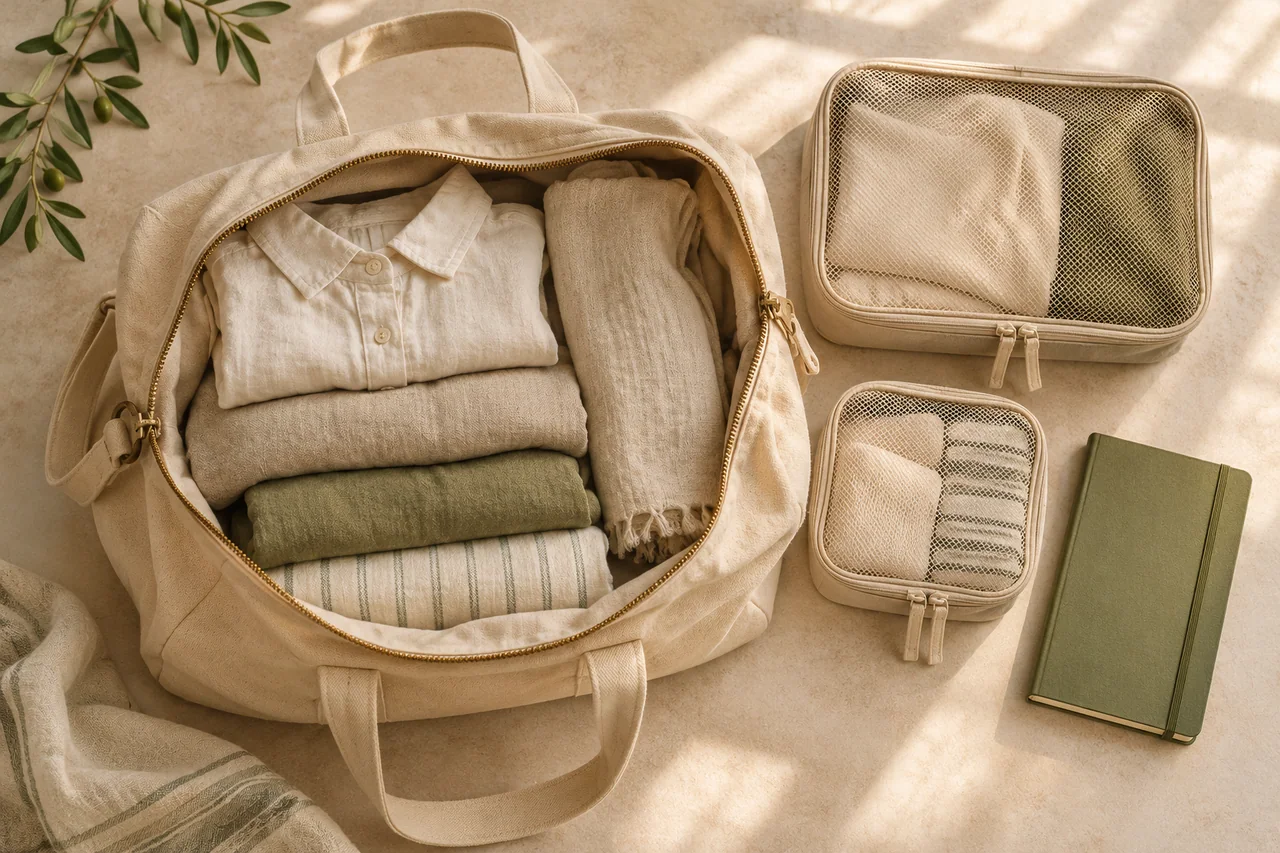
A conventional packing cube is a zipped container used to group items. A compression cube adds a mechanism, often a second zip, to tighten the packed bundle. A roll-compression bag expels air through a valve as you compress it. Eagle Creek describes these distinctions in its manufacturer guide; that description does not establish performance for every product sold under similar labels.
Some storage bags require a vacuum or pump, so confirm how the exact design works. Ask whether you can repeat the process in a hotel room on the return journey. A product that needs equipment you will not have is a poor match for a travel routine, even if it works well in your wardrobe at home.
Choose around the moment you open the bag
Picture a two-night hotel stay. You might want one cube for clean tops, one for underwear, and a small separate bag for used clothing. Clear categories let you remove the group you need and return it without rearranging everything else. The organizer does not need to squeeze tightly to be useful in that situation.
Now picture a trip with a bulky layer you will not need until later. That item is a different candidate: accessibility matters less until the weather or destination changes. Group clothing by when you will use it, rather than assigning every piece to a matching container. A mixed system can be more practical than using one organizer design throughout the bag.
Look at shape as well as nominal capacity
Measure the usable space inside your luggage before buying a large set. Pay attention to rounded corners, wheel housings, and the depth available when the bag closes. Two organizers whose stated volumes add up neatly may still leave awkward gaps or make the lid difficult to shut.
Use folded clothing to mock up the intended arrangement. Leave space for toiletries and electronics rather than treating them as items to fit afterward. A wide, shallow cube might suit an opening suitcase while a narrower one may be easier to retrieve from a backpack. The best shape is the one that fits your bag and your way of accessing it.
Separate the weight question from the space question
Compressing a group of clothes does not remove their weight; the organizer also becomes part of the load. Weigh the packed bag after using any new system. Avoid filling newly available space automatically, especially when you are trying to make the bag easier to carry rather than merely easier to close.
Airline limits still apply to the packed luggage. American Airlines, for instance, publishes dimensions that include handles and wheels for its larger cabin bag. Compression inside the case does not change those external requirements. Check your own operating carrier and fare rather than using a compression accessory as evidence that a bag will be accepted.
Keep access and garment care in the decision
Try opening and repacking the organizer with the actual garments you plan to take. See whether you can remove one item without unfolding the rest, whether the zip catches loose fabric, and whether you can close it comfortably without forcing the mechanism. Check garment care instructions before deciding to keep a delicate or structured item tightly compressed.
Treat leakage and water protection as separate product questions. A closed zip or an air valve does not by itself prove that a bag is suitable for wet clothing or exposure to water. Read the specific claim and care instructions. For used garments, choose a separation method that suits their condition and unpack them promptly when you can.
Buy one useful piece before a full set
Start with the part of packing that currently wastes the most time. One small cube can organize underwear; a single suitably sized compression bag may solve a bulky-item problem. Test that piece in your next packing rehearsal before committing the rest of the bag to a system.
Compare empty weight, measured size, opening style, ease of cleaning, and return terms. Calculate value by the pieces you expect to use rather than the number in the set. After a trip, note which organizer you opened repeatedly and which stayed untouched. That observation gives the next purchase a specific purpose and helps keep the kit smaller over time.
KEEP IT SIMPLE
Your quick checklist
- Main packing problem identified
- Usable interior dimensions measured
- Compression method checked for return-trip use
- Actual garments packed without forcing the zip
- One item removed and replaced
- Full bag weighed after compression
- Care and water-protection claims checked
FURTHER READING
Sources & useful references
These sources support the guide. Rules and product details can change; check the relevant provider before your trip.
- Eagle Creek: packing cubes, compression cubes, and compression bagsChecked November 16, 2026
- American Airlines: carry-on bags and personal itemsChecked November 16, 2026
Our guides are based on source research and practical comparisons. We identify hands-on testing when it has actually taken place. Some commercial links may earn a commission.
How our recommendations and links work