A three-day business trip is easiest to pack when you start with the calendar. A client presentation, a work dinner, and a morning of remote meetings need different things. Count the actual commitments before counting shirts. Then build a small wardrobe around the most demanding event and let the less formal moments reuse what is already there.
The example here assumes two nights away, three working days, and ordinary hotel accommodation. It is a planning exercise rather than a dress-code rule. Add specialist clothing or equipment when your industry, accessibility needs, or weather calls for it. The most useful bag is the one that keeps your work essentials separate from the contents you will unpack at the hotel.
Map outfits to appointments
Write a line for each day and name the outfit you plan to wear. For a mixed business-casual schedule, a possible starting point is one pair of trousers worn in transit, one alternative bottom, three tops across the trip, underwear and socks for each day, and one adaptable outer layer. Treat these counts as an example, then adjust them to your own clothing and comfort.
Choose pieces that already work together. If the formal event requires a jacket or particular shoes, make those the starting point. A second pair of shoes has a large claim on the bag; bring it for a defined activity or dress requirement. Set aside a simple evening outfit only after checking whether the daytime pieces can cover it.
Protect the first meeting
Ask what would happen if you arrived without access to your main bag. The answer usually points to the highest-priority items: the device needed for the meeting, its charger, your documents, and enough clothing to be presentable. Give those a deliberate place in the bag that stays with you within your airline allowance.
If a shirt or jacket needs careful folding, keep it away from overfilled compression organizers. Pack it in a way that lets you remove it promptly at the hotel. Photographing your outfit combinations at home can make the morning simpler, especially when a dark bag contains several similar garments. No new packing accessory is required for this step.
Carry a work kit with a defined job
Start with the computer and accessories your work actually requires. If you present through a cable, confirm the destination connection and bring the appropriate adapter. If you use a headset for calls, test it with the meeting software before departure. Save the critical presentation in an offline location permitted by your organization and follow its information-security rules.
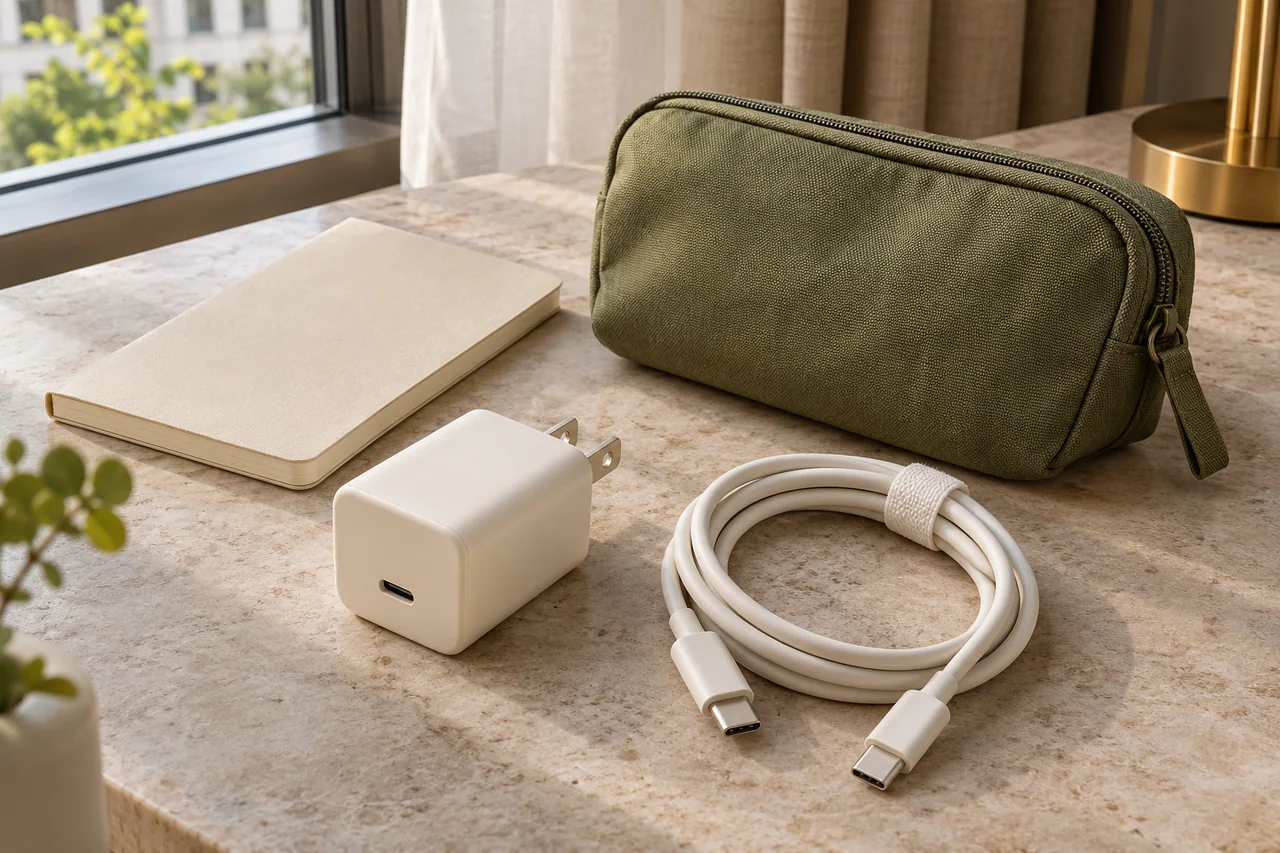
Choose a small pouch for power and connection accessories. Label unfamiliar adapters by purpose so they are easy to identify. A travel mouse, stand, or keyboard is worthwhile when it addresses a specific task or comfort need; all three need not travel by default. Keep your final kit compact enough to repack after a meeting without leaving parts behind.
Check the charger before changing countries
Read the input label and the manufacturer instructions for each charger you intend to take. Match the plug arrangement to the destination and check the power requirements of the device. Do not treat every travel adapter as compatible with every charger simply because the parts appear to fit together.
For example, Apple explains that its World Travel Adapter Kit changes the plug shape, not electrical voltage, and is intended for compatible genuine Apple power adapters. That is a product-specific instruction. Apply the same habit of checking the exact manufacturer guidance to your own equipment, rather than assuming that advice for one brand covers the entire work kit.
Make the security stop easy to repack
Keep the laptop and any items you may be asked to present for screening easy to reach. The TSA travel checklist for U.S. screening recommends accessible placement of large electronics and the liquids bag. Follow the instructions at the checkpoint you actually use; the layout and screening procedure may differ on another part of the trip.
Keep the outer pocket for a limited set of small items. A pocket filled with loose receipts, coins, pens, and adapters takes time to empty and rebuild. A slim folder or envelope can gather receipts during the trip. Leave an obvious home for your room key and transport tickets so they do not become mixed into the work accessories.
Finish with a ten-minute departure reset
The night before returning, put the used clothes together and restore the work kit to its original arrangement. Count accessories against the same short list you used to pack. Check the sockets, desk, bathroom shelf, and wardrobe before closing the bag. This is easier when each category has a place than when everything is fitted into whatever gap remains.
After the trip, note what you wore and what never left the bag. Keep the note with your packing list and change only what the trip taught you. A repeatable three-day setup becomes more useful with a few deliberate adjustments: one better cable length, one less spare garment, or a pouch that opens the way you actually work.
KEEP IT SIMPLE
Your quick checklist
- Outfits matched to appointments
- Clothing for each planned working day
- Shoes chosen for actual activities
- Laptop and tested charger
- Required presentation adapter
- Offline work files where permitted
- Headset checked with meeting software
- Destination plug and charger compatibility checked
- Receipts and small documents gathered
- Desk and sockets checked
FURTHER READING
Sources & useful references
These sources support the guide. Rules and product details can change; check the relevant provider before your trip.
- TSA: travel checklist for U.S. security screeningChecked November 16, 2026
- Apple Support: using the World Travel Adapter KitChecked November 16, 2026
Our guides are based on source research and practical comparisons. We identify hands-on testing when it has actually taken place. Some commercial links may earn a commission.
How our recommendations and links work