An overnight connection has two separate planning jobs: arranging a place you can actually use and packing the things you will need there. Do the first before buying comfort accessories. A long gap between flights does not itself confirm access to a hotel, a lounge, checked baggage, or an overnight terminal area.
Build the packing list around your confirmed arrangement. A hotel night needs a compact change of clothes and a morning routine. A shorter wait needs accessible documents, power, and a way to keep your immediate belongings together. The examples below help you ask the right questions without assuming that every airport operates in the same way.
Confirm the overnight arrangement
Check the official airport connection guidance, the hotel location, and your airline booking. Establish whether the room or rest area is before or after border control, which terminal it serves, and whether you can reach it during your connection. Ask how you will return to the departure area and when check-in or security will be available.
Heathrow is a useful example of why this matters: its connection page says there is no place to sleep overnight in the terminal and points travelers to nearby hotels. Leaving the airport involves UK entry requirements. That is guidance for Heathrow, not a claim about all airports; verify the current arrangements for your own stop.
Check the documents for the route you will take
A passport and boarding pass may not answer every question about leaving the transit area. For a UK stop, use the official government checker to see whether your nationality and circumstances require a visa or electronic travel authorisation. For another country, use its equivalent official entry and transit guidance. Do this before paying for an accommodation plan that depends on crossing the border.
Keep the hotel confirmation, its address, terminal information, and your onward booking available offline. Write down the transfer steps in plain language. A simple sequence such as arrivals, hotel shuttle pickup, reception, and next-morning departure is easier to follow when you are tired than a collection of screenshots with no order.
Build one self-contained overnight pouch
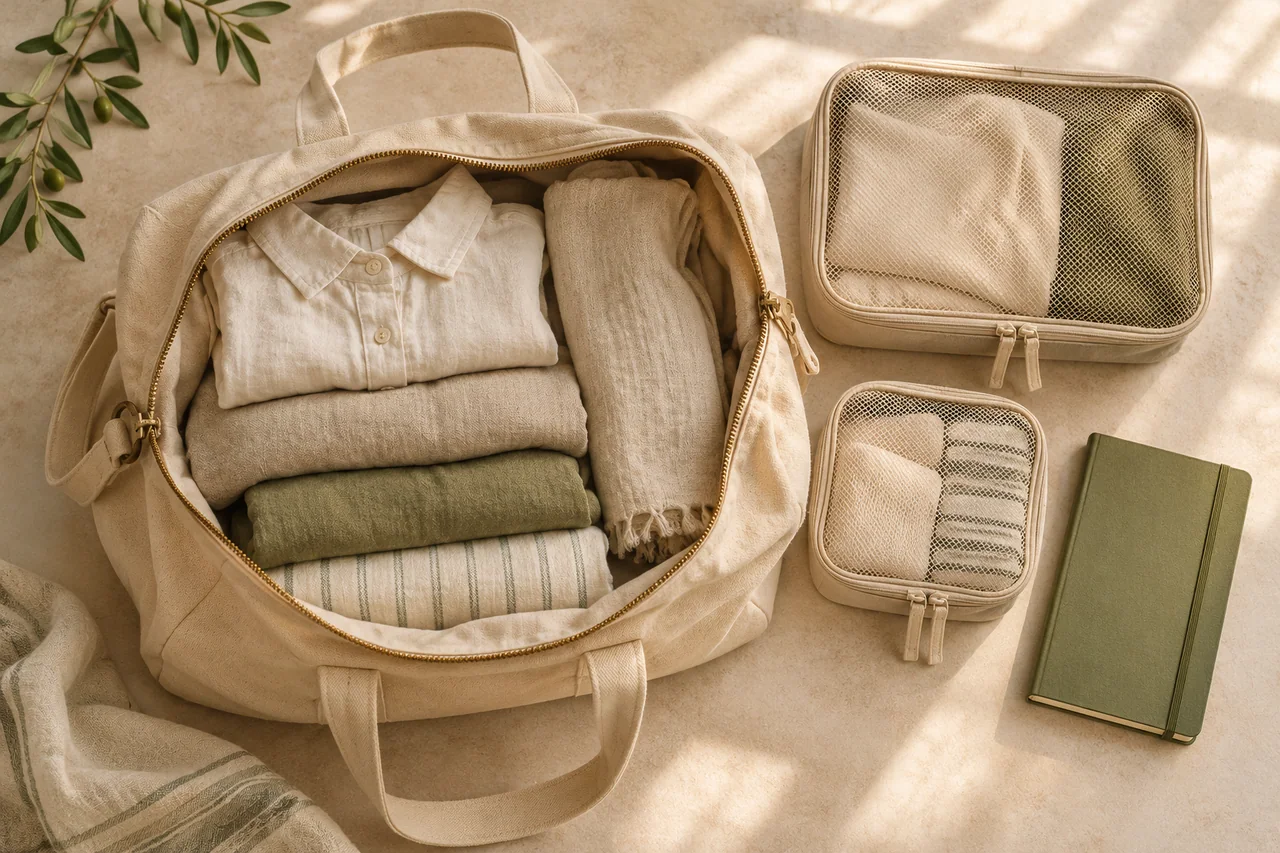
Put a clean top, underwear, socks, and the personal-care items you expect to use together in a small part of your cabin bag. Add sleepwear if your accommodation plan calls for it. You should be able to retrieve this group without unpacking the clothing for the rest of the trip.
Do not assume your checked luggage will be available. Confirm baggage handling with the airline, particularly if flights were bought separately. Your overnight pouch should cover the arrangement you have verified. If the airline confirms that you must reclaim and recheck everything, allow space and time for that larger handling job rather than planning around a cabin pouch alone.
Treat lounge access as a specific booking
If you want to use a lounge, check the terminal, access conditions, opening hours, permitted stay, and the facilities included in your booking. A shower, quiet seating, or a place to work can be useful without providing a bed for the night. Confirm the exact service that solves your problem before deciding what to leave out of your bag.
Record any booking reference beside the relevant terminal information. If the lounge is optional, keep your essentials usable elsewhere: a phone cable, a familiar layer, headphones, and your small wash kit. This approach makes the pouch useful even if your flight schedule changes or the facility is unavailable when you arrive.
Calculate the usable rest window
Work backward from the next flight. Include the airport or airline arrival guidance, the return transfer, checkout, and your own preparation time. Then work forward from the first flight to allow for disembarking, border procedures where relevant, baggage handling, and reaching the room. The time between those two points is the rest window to evaluate.
For example, an eight-hour gap can contain several separate travel tasks. List them instead of treating all eight hours as time in bed. Confirm shuttle operating hours or another transport option if you depend on a transfer. Choose the arrangement that leaves you a practical morning, and avoid building it around a sequence of best-case timings.
Prepare the morning before you rest
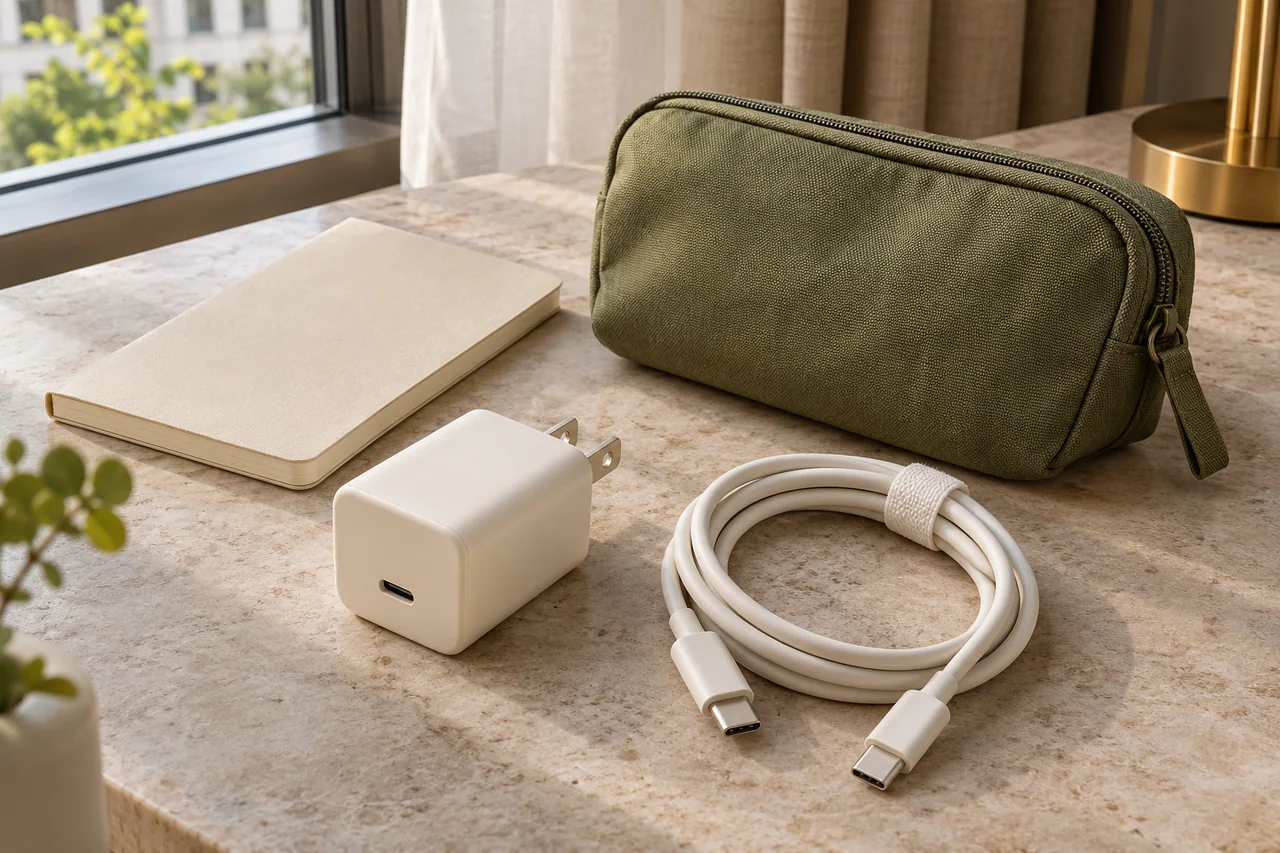
Set out the onward outfit and restore the items that must remain easy to reach: documents, phone, wallet, and the next boarding information. Connect the devices you need, using equipment appropriate for the location. Set an alarm you know how to manage and check the local time used for the flight and any wake-up service.
Before leaving, look at the sockets, bedside area, bathroom, and any shelf where you placed small items. Return the overnight pouch to its place, and confirm the departure terminal again in the airline or airport information. Keeping the reset short is the point of the dedicated kit: it helps you leave with a complete bag and a clear next step.
KEEP IT SIMPLE
Your quick checklist
- Exact terminal and accommodation location
- Entry or transit requirements checked
- Baggage access confirmed with the airline
- Return transfer and opening hours checked
- Clean top, underwear, and socks
- Personal-care essentials
- Charging setup and offline confirmations
- Onward outfit prepared
- Local departure time and terminal checked
- Sockets and bathroom checked before leaving
FURTHER READING
Sources & useful references
These sources support the guide. Rules and product details can change; check the relevant provider before your trip.
- Heathrow: connecting flights and overnight connectionsChecked November 16, 2026
- GOV.UK: check whether you need a UK visa or ETAChecked November 16, 2026
Our guides are based on source research and practical comparisons. We identify hands-on testing when it has actually taken place. Some commercial links may earn a commission.
How our recommendations and links work